Reliable standards tailored to the application are essential for accurate, realistic and accelerated weathering testing. However, with hundreds of published standards, it is interesting to know who is developing these important documents.
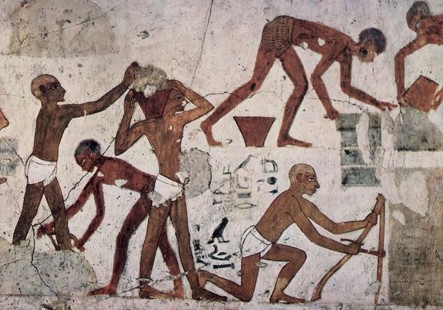
Technical standards were not first invented in our modern world. The ancient Egyptians standardized the dimensions of the mud bricks used in the pyramids as early as 4000 years ago. And without decent standards for cast lead pipes, the impressive Roman aqueducts and baths would not have been possible.
SDO’s
Today, the organizations responsible for standards are known as SDO’s - Standards Development Organizations. An SDO provides resources and a forum for stakeholders to develop technical standards through committee structure and standardized approval processes.
International Standards Landscape
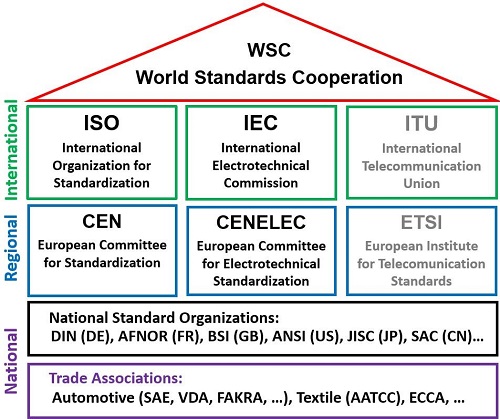
Overall guidance for technical harmonization is provided through United Nations trade regulations. International SDO’s, such as ISO and IEC are authorized to develop global standards. In some instances, there is cooperation and joint development of standards with regional organizations such as CEN and CENELEC in Europe. Participating nations provide expertise through their respective national SDO’s, for example DIN in Germany, JISC in Japan, or ANSI in the USA.
In addition to government SDO’s, most countries have private, industrial and association SDO’s with specific scopes. For example, the ANSI website lists nearly 50 of these for the USA. Finally, individual manufacturing companies set their own standards that suit their unique needs and goals. OEM’s often refer to an international standard but add specific requirements and restrictions.
Key Technical Committees on Weathering
The list below is a selection of 8 major international bodies responsible for key weathering and lightfastness standards. Atlas is a long-time member on all of these committees and can help answer specific questions about standards that have been developed in the various groups.
1) ISO/TC 61 – Plastics (SC 6)
Measured by published standards, ISO/TC 61 is no. 5 of all ISO TC’s with 720 published documents. JTC 1 on “IT” (3394) is the clear no.1, followed by TC 22 “Road Vehicles” (992), TC 34 “Food” (927) and TC 184 “Automation” (886).
ISO/TC 61 has 11 active subcommittees (SC). SC 16 “Ageing, chemical and environmental resistance” has published 41 standards, plus 9 currently in development. Key weathering standards, which are widely harmonized with the ISO 16474 series on coatings, are:
• ISO 4892-1 - Exposure to laboratory light sources - General guidance
• ISO 4892-2 - Xenon-arc exposure
• ISO 4892-3 - Fluorescent UV exposure
• ISO 877-1 - Exposure to solar radiation - General guidance
• ISO 877-2 - Direct weathering and exposure behind window glass
• ISO 877-3 - Intensified weathering using concentrated solar radiation
2) ISO/TC 35 – Coatings (SC 9)
ISO/TC 35, 38 and 61 were all created as part of 67 TC’s when ISO was formed in 1947. Currently, TC 35 has 5 SC’s. The most active is SC 9 “General test methods for paints and varnishes” which has published 182 standards, with 17 under development. Important standards on weathering:
• ISO 16474-1 - Exposure to laboratory light sources - General guidance
• ISO 16474-2 - Xenon-arc exposure
• ISO 16474-3 - Fluorescent UV exposure
• ISO 2810 - Natural weathering
3) ISO/TC 38 – Textiles (SC 1)
SC 1 “Tests for colored textiles and colorants” has published 107 standards, 3 being under development. Important standards are:
• ISO 105-B02 - Color fastness behind window-glass – xenon-arc test
• ISO 105-B04 - Xenon-arc weathering
• ISO 105-B06 - Color fastness and ageing to xenon-arc at high temperatures (hot-light fastness)
4) ASTM G03 – Weathering
In some countries, the actual standards development work is delegated by the national ISO member body to national SDO’s. For instance, ANSI in the USA, while coordinating all ISO activities, delegates a substantial part of standards activities to ASTM International (American Society for Testing and Materials) and AATCC (American Association of Textile Chemists and Colorists), including standards on weathering and lightfastness.
ASTM Committee G03 on Weathering and Durability was formed in 1965. Its 6 sub-committees maintain authority over 29 standards. Although a US organization, ASTM International can actually be considered an international SDO as its standards are used worldwide. Examples for key weathering standards:
• ASTM G7 – Natural weathering of materials
• ASTM G24 – Exposure to daylight filtered through window glass
• ASTM G90 – Accelerated outdoor weathering using concentrated natural sunlight
• ASTM G151 - Exposure to laboratory light sources
• ASTM G154 - Exposure to fluorescent UV
• ASTM G155 - Exposure to xenon-arc
5) ASTM D01 – Coatings (D01.27)
ASTM Committee D01 for Paints and Coatings was established as early as 1902 and was involved in some of the earliest systematic outdoor exposure studies. Several subcommittees share responsibility for more than 675 standards. The most important weathering standard are:
• ASTM D7869 – Xenon-arc exposure with enhanced light and water for transportation coatings
• ASTM D6695 - Xenon-arc exposures of paints and coatings
6) ASTM D20 – Plastics (D20.50)
ASTM Committee D20 on plastics was established in 1937. 23 subcommittees manage a total of 475 standards. Major weathering standards:
• ASTM D2565 - Xenon-arc weathering for outdoor applications
• ASTM D4459 - Xenon-arc exposure for indoor applications
7) SAE – Automotive Materials Association
SAE published several popular weathering and lightfastness standards. In the meantime, this group has reduced its standards development activities; automakers in the US have returned to developing their own standards. They are now transitioning to using "primary" SDO’s such as ASTM and ISO to propagate their industry standards. Nevertheless, SAE standards are still widely used in the automotive industry:
• SAE J2412 – Xenon-arc exposure of automotive interior
• SAE J2527 - Xenon-arc exposure of automotive exterior
• SAE J1960 – withdrawn, predecessor of J1960 but still referenced
• SAE J1976 – Outdoor Weathering of Exterior Materials
8) AATCC – Textiles (RA 50)
Textile standardization in the USA is driven by AATCC (American Association of Textile Chemists and Colorists), which was founded in 1921. Active Research Committee “RA 50” is responsible for lightfastness and weathering test methods:
• AATCC TM 16.3 – Xenon-arc test methods for colorfastness to light
• AATCC TM 169 – Xenon-arc test methods for weather resistance
More Information
Check out our recent blog posts, where you find application-specific lists of important weathering standards, as well as news about new developments, technologies, and test methods.
Atlas offers several Standards Guides:
• Weathering tests for automotive interior and exterior
• Most frequently used weathering testing standards
• Abbreviations, organizations, and associations in weathering standardization
• Natural and laboratory weathering test methods for polymers
• Solar environmental stress testing with metal halide solar simulators
For further information on laboratory or outdoor weathering testing, check out our online library, live educational calendar, or our library on video tutorials and recorded online seminars.