One of the most important weathering standards, ISO 4892-3 “Plastics - Methods of exposure to laboratory light sources - Part 3: Fluorescent UV lamps” was completely revised and recently released. Here are the major changes.
Two Types of Fluorescent UV Instruments
Historically, two types of fluorescent instruments exist:
- condensation type a (like the Atlas UVTest designed in accordance with ASTM G154),
- less common climatic chamber-based type.
Previous editions of ISO 4892-3 did not clearly differentiate between both types. This led to confusion and inconsistencies in the test parameters. Atlas experts identified these deficiencies and worked with the responsible committees to improve the standard. ISO 4892-3 (2024) now clearly differentiates between the two different instrument types.

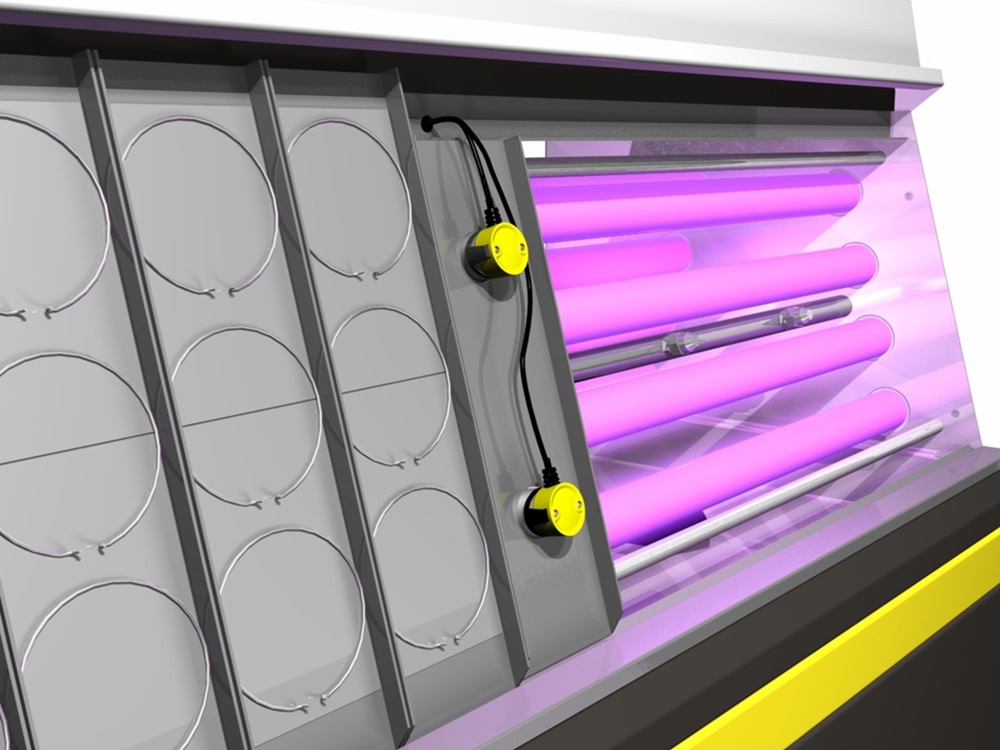
Basic setup of a condensation type fluorescent UV instrument (Atlas UVTest).
Test Cycles for Condensation Type Instruments,
The Atlas UVTest performs all test cycles for condensation type instruments, thus meeting the standard by Atlas instruments is not affected.
During the condensation step, the lamps are turned off and water is evaporated. The test specimens, as mounted, form the back outer side of the test chamber and are convectively cooled from the backside with laboratory air, which leads to condensation of water on the front side of the test specimen. For thin or thermally conductive specimens, cycle 1 is recommended. Since plastics are typically poor thermal conductors, spraying the specimens with water spray helps to cool them down. This occurs in cycle 2 with a 15-minute water spray phase prior to condensation. Cycle 1 and 2 use UVA-340 lamps. Other cycles exist which are intended for UVA-351 and UVB-313 lamps.
The table shows the test parameters of ISO 4892-3 cycles 1 and 2 for condensation type instruments.

Test Cycles for Both Instrument Types
Cycles 3 and 4 (not shown here) have longer water spray periods and no condensation. These were originally intended for climatic chamber type devices but are used today for both instrument types. Climatic chamber type instruments control relative humidity and chamber air temperature but not the sample surface temperature (black panel). Consequently, there are now separate cycles for these instruments in an additional table (also not shown here).
Overheated Samples
Fluorescent UV lamps emit almost no visible and no IR radiation. Therefore, previous versions of the standard stated that “the difference between the temperature of
• a black-panel thermometer,
• a black-standard thermometer,
• the specimen surface and
• the air in the test chamber
is typically <2 °C.” However, this statement is only valid for climatic chamber type devices where the specimen temperature is controlled by the chamber air temperature.
In fluorescent UV devices, it is true that the specimen color has no influence on the specimen temperature, but for condensation type devices, the specimen temperature depends on the
• thermal capacity and conductivity of the substrate,
• the chamber air temperature, and
• the air temperature of the laboratory, as shown in the diagram.
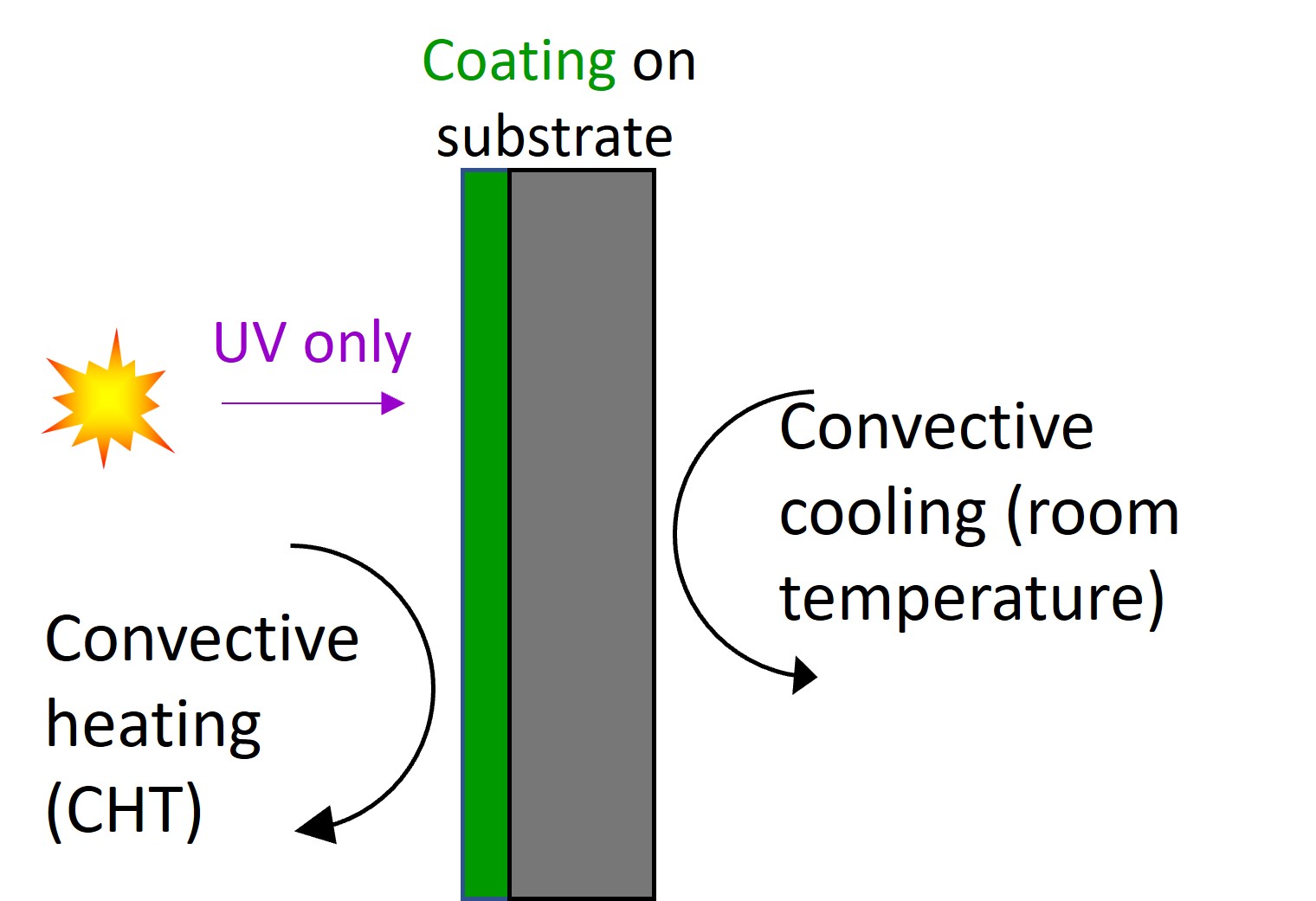
Scheme of influencing factors on specimen temperature in a condensation type instrument.
It has been found that the difference between the surface temperature of a black-standard thermometer and an insulated test specimen can be significantly higher than 2°C, and if not considered, can lead to unrealistic temperatures, possibly damaging the samples. Therefore, the “old statement” is now removed, with proper guidance on testing insulated specimens being included.
Other Changes and Summary
It is not recommended to handle wet test specimens for intermediate and final evaluations. This is why early fluorescent UV standards, like the withdrawn ISO 11507, included the statement: “…examination shall be carried out towards the end of the dry phase of the test cycle.” However, this statement unfortunately disappeared in newer standard releases. It is now re-introduced in ISO 4892-3 (2024). For more information on importance of the cycle sequences see a related blog post.
Overall, this in-depth revision of ISO 4892-3 provides greatly needed clarification, also addressing many inconsistencies from earlier editions. For reproducible test results, we strongly recommend following the additional guidance given in this new edition.
More Information
You find more information in our recorded online seminars on Fluorescent UV vs. xenon-arc and laboratory weathering.
For further guidance have a look into our online library, listen to recorded online seminars or review upcoming online and on-site educational classes.