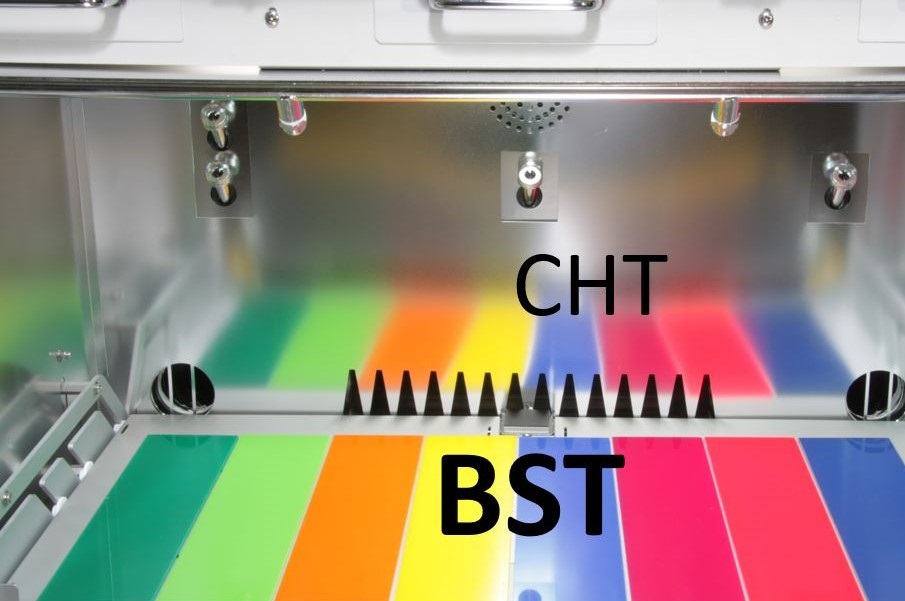
Xenon-arc weathering instruments use black surface temperature sensor in addition to a air temperature sensor to provide a more accurate representation of the test conditions experienced by the materials being tested. For precise testing, a xenon weathering instrument must be equipped with both sensors.
Black Standard Panel (BST) / Black Panel (BPT)
BPT and BST sensors use metal plates with an extra-durable black coating to absorb radiation effectively, mimicking the highest realistic surface temperature of a test specimen that absorbs heat from radiation.
Black standard temperature sensors are standardized in ISO 4892-1 and are referred to as “insulated black panel sensors” in ASTM G151. Black panel temperature sensors are sometimes also referred to as “uninsulated black panel sensors”.
BPT and BST can differ significantly (>20 K) from the chamber air temperature (CHT) due to differences in heat exchange with the environment.
The rate of degradation is highly dependent on the specimen temperature. Since photooxidation always starts at the surface of the specimen, its surface temperature is the most relevant factor.
Chamber Air Temperature (CHT)
The chamber air temperature sensor must be shielded from radiation
CHT monitoring assists in the maintenance of the overall thermal environment within the test chamber. This ensures more consistent and reproducible test conditions.
CHT alone doesn’t account for the actual surface temperature of a colored test specimen, so it is insufficient as the sole metric in a weathering test.
Why Combining Both Sensors
Realistic simulation: Outdoor weathering conditions involve a combination of radiant heat and ambient air temperature. Using both sensors helps replicating this environment more accurately.
Material-specific effects: Different materials absorb and dissipate heat differently, and their degradation majorly depends on their surface temperature.
Support of repeatability: Many industry standards (e.g., ASTM, ISO) require control of both black panel and chamber air temperature to ensure test results are well repeatable and reproducible across different instruments.
In summary, the use of both temperature sensors for black panel and chamber air ensures a more comprehensive evaluation of environmental stress factors on materials. Thus, leading to more reliable weathering test results.
More Information
Listen to our recorded webinar on surface temperature in weathering testing and read our technical note on contactless sample surface temperature measurement.
For guidance on proper weathering testing, contact us, have a look at our library, or review upcoming educational events.